Frederick's Betrayal
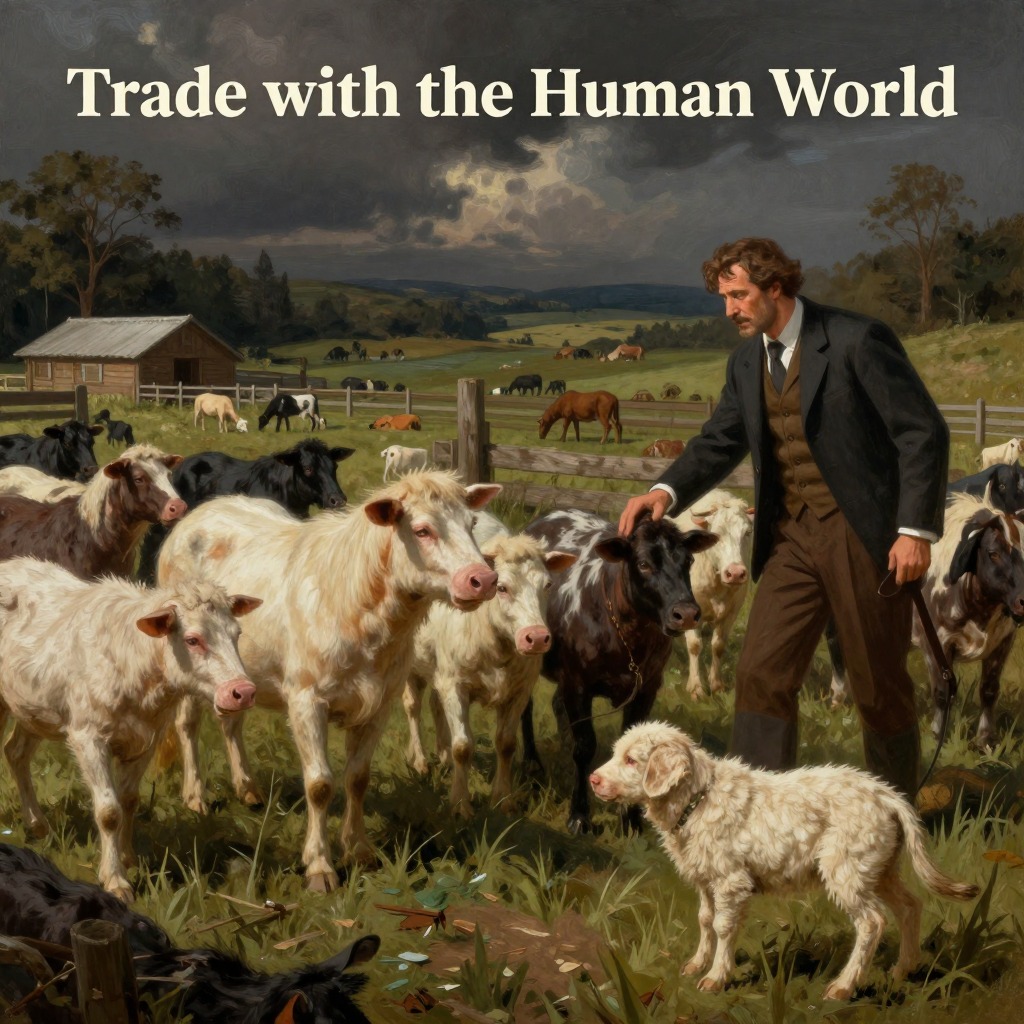
Animal FarmFrederick's Betrayal was a pivotal act of deception that exposed the limits of Napoleon's cunning and shattered the animals' trust in commerce with the human world. Napoleon, through a prolonged secret negotiation, had appeared to court Mr. Pilkington of Foxwood in order to force Mr. Frederick of Pinchfield to raise his offer for the farm's seasoned timber by twelve pounds. The pigs were in ecstasies over Napoleon's strategy; Squealer later praised the superior quality of his mind, noting that he had refused Frederick's offer of a cheque and demanded payment in real five-pound notes, to be handed over before the timber was removed. Frederick paid the sum, which was just enough to purchase the machinery for the windmill, and the timber was carted away.
Three days later, the truth erupted. Mr. Whymper, the solicitor, came racing up the path on his bicycle, his face deadly pale, flung it down in the yard, and rushed into the farmhouse. A choking roar of rage sounded from Napoleon's apartments. The news sped round the farm like wildfire: the banknotes were forgeries. Frederick had obtained the timber for nothing.
Napoleon immediately called the animals together and, in a terrible voice, pronounced the death sentence upon Frederick, declaring that when captured he should be boiled alive. He warned that after this treacherous deed the worst was to be expected, and that Frederick and his men might launch a long-expected attack at any moment. Sentinels were placed at all approaches to the farm, and four pigeons were dispatched to Foxwood with a conciliatory message, in the hope of re-establishing good relations with Mr. Pilkington. The betrayal, a calculated swindle rather than a military defeat, left the farm economically wounded and set the stage for the violent confrontation that followed.